Categorías
Sin categoría

Sell me this pen

We have come a long way until this last topic. We learned how to think, the differences, creativity, how to design thinking for a problem and now to sell that design, in other words, pitching. For some people this word is scary, it has so much power for a talk of such a short amount of time, and there are only a few people that can perform it the way it supposes to.

A pitch is a presentation of a business idea to potential investors. It lasts around 60 to 90 seconds. People pitch a business because they need resources. If the goal is to raise startup cash, the target of the pitch is an investor. Other companies pitch to potential customers to sell their product. Finally, some organizations pitch because they need a partner or resource to help them accomplish their mission.

The aim of the blogs is for you guys to understand the concept and importance of pitching. Therefore I will list some guidance points for you to prepare your pitch and yourself. Good luck!

  • Investors are busy people. As we already explained, pitching doesn’t last long that’s why you need to start with a boom, something that calls their attention, e.g. storytelling.
  • Uniqueness. You need to be very clear on the uniqueness of what are you selling, on why is it the best, why it will work, concentrate on the why.
  • Less is more. You need to be concrete on what are you saying and the importance of it.
  • Do your homework. Try to get to know your investors before the pitching so that you can use different events, facts or examples to make them feel more related to your business.
  • Business model. Show statistics that will validate the income of your business, the average sales, etc.
  • Win-win. Make it very clear how they (inverstors) will generate returns on their investment. You will have an excellent opportunity for the investor if he/she believes that they will make significant returns on their investment.
  • Cliffinger. Is as important as the first one to catch their attention at the end and let them thinking how helpful, bright and creative your proposition is.
  • Don’t forget to cite. Reference every statistic and claim that you are using to validate your business.

You need to know that even if you do all this, there’s still a chance that some investors just won’t buy the idea for different reasons, DON’T GIVE UP. It doesn’t mean that it is not a great idea.

I will leave you with a quote. I hope you guys arise above everything with your ideas and reach the sky. Thank you for reading this. See you next time!

«Don’t think of pitching, think of offering. The offer is better than the pitch»

– Sonia Simone

References:
https://study.com/academy/lesson/business-pitch-definition-types-importance.html
https://www.jumpstartinc.org/wp-content/uploads/2016/09/Investor-Pitch-Tool-9616.pdf
Categorías
Sin categoría

Key to design thinking

Today it’s a big day. We have come through a long road, and our research now will pay off. Today, we are talking about design thinking. After all of our explanation about thinking skills and creativity, we are merging our knowledge into the application field, in this case: design thinking.

«Design thinking is a human-centered approach to innovation that draws from the designer’s toolkit to integrate the needs of people, the possibilities of technology, and the requirements for business success.»

– TIM BROWN, EXECUTIVE CHAIR OF IDEO

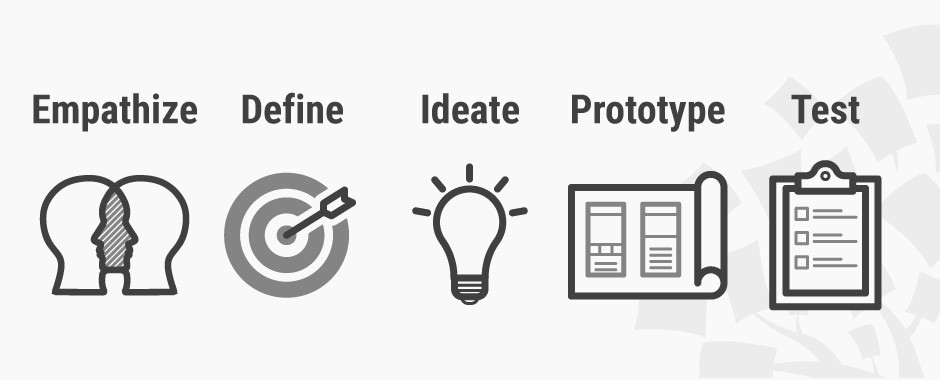
In design thinking, there is a whole process to follow that could lead us to a great outcome along with different tools to help us. We can use our basic thinking skills like observation, then the empathize, brainstorming, prototype and lastly, the test.

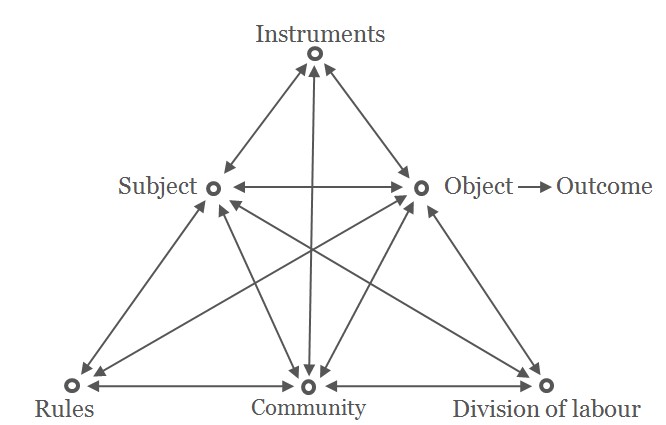
Observation, we have very much covered what it is, and as we explained in our previous blog, it’s a basic skill. Here would help us to look for the problem, by observing whether peoples behaviours or actions and see what’s wrong or what could be improved. Thankfully, there is a tool for this step, which is called activity theory, it helps us besides the fact of just observing, to think about everyone that it’s involved and organize our ideas.

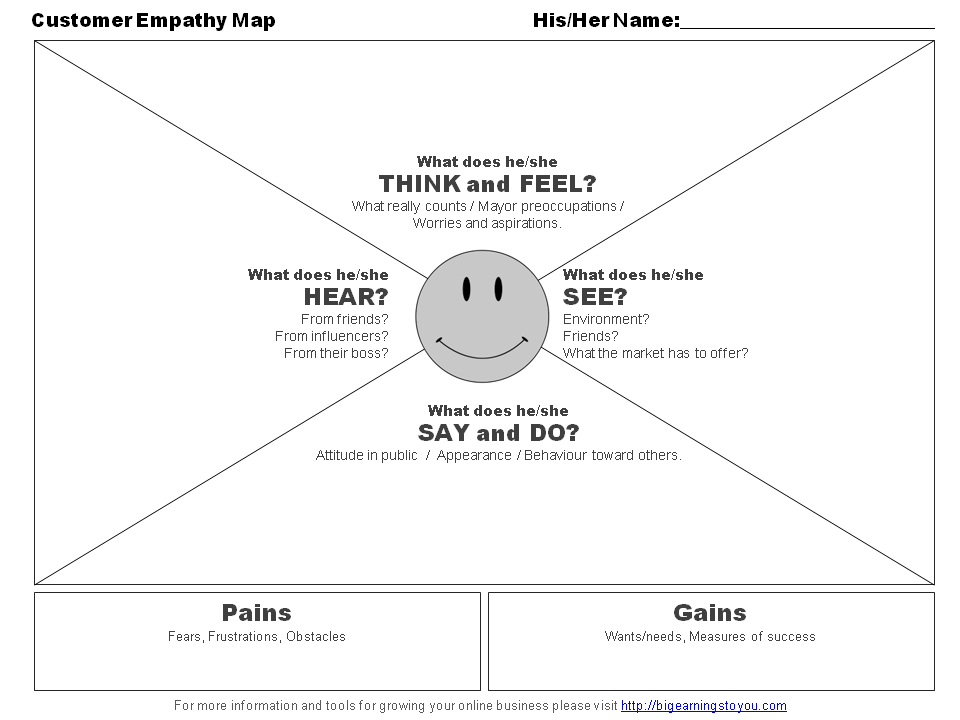
Now that we have defined the problem, the next stage is to understand beyond itself the problem and for that, we need to empathize with it, to be the subject and comprehend their necessities. There are two useful tools for this, we could do a role play or another map (don’t blame me, I love maps).

The empathy map is a collaborative visualization used to articulate what we know about a particular type of user. It externalizes knowledge about users to create a shared understanding of user needs and aid in decision making.

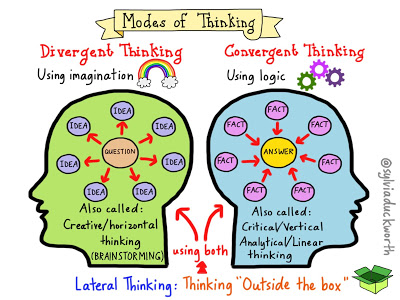
Till this point, you should understand your problem and the affected user entirely that you want to help. Brainstorming now, thinking ideas (our divergent thinking) and then analyzing them (convergent thinking) to choose the best one that could fulfil the need of our user.

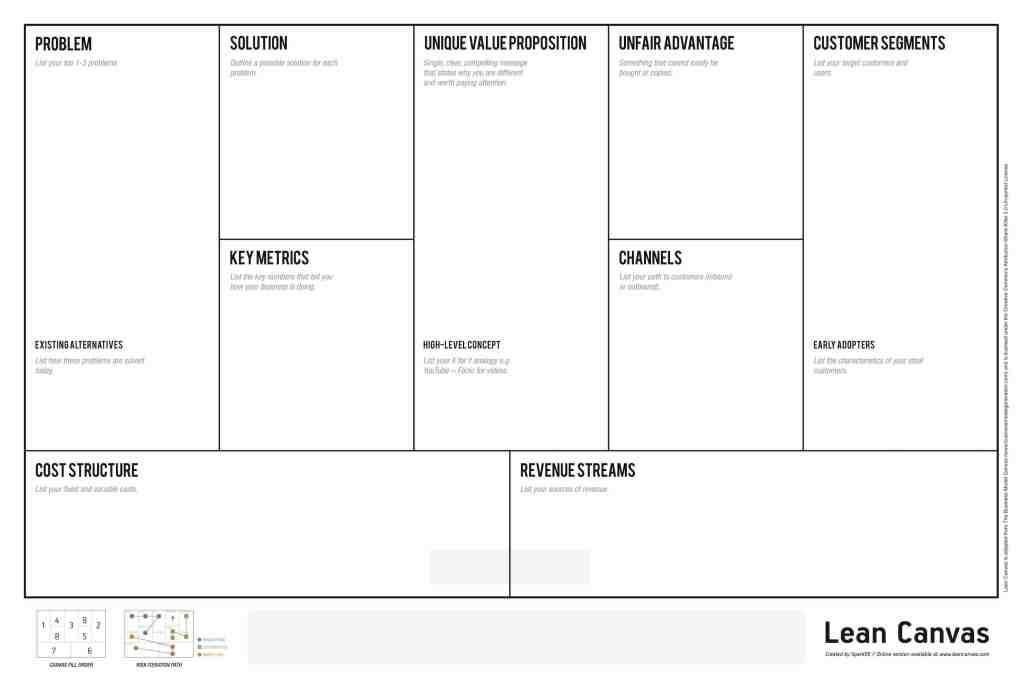
The prototype and the testing are essential steps, this varies since it depends on the business model, your objective, your target market, among other things. For that, I honestly recommend business lean canvas for you to see how your project could work and with it to see if there is room for more improvement.

With that said, I hope you liked this blog and if you have any questions don’t doubt asking me.

References:
https://designthinking.ideo.com/
https://www.interaction-design.org/literature/topics/design-thinking

Categorías
Sin categoría

Are you divergent or convergent?

Hello everyone! Hope you are having a great day. Today we have more juicy material to talk about. In the first three blogs, our main topic was thinking, and while divergent and convergent thinking where mentioned, we never actually had the chance to get deep in it. In the last blog, we talked a little bit about creativity because I really wanted to have that subject explained for this topic to be more understandable. Now, it’s all about these two beautiful parts of our brains. With that said. Let’s jump right into it.

A little definition to begin with: Divergent and convergent thinking skills are the essential cognitive processes involved in solving problems (Guilford 1957). Divergent thinking seeks to understand the problem from multiple perspectives and to generate various solutions. While convergent thinking is the process of evaluating and selecting the most optimal solution based on some criteria (Basadur 1990).

This two kind of thinkings don’t need to be right or wrong or don’t have both (which you actually can not have them). The main difference comes when you are using them and if you are doing it a the same time. As Basadur said, divergent is thinking the ideas while convergent is evaluating those ideas, meaning, both are part of a process, and what is a process? A series of steps to get to do something.

Anne Manning, a Harvard instructor for the course: «Creative Thinking: Innovative Solutions to Complex Challenges» in a video, she talks about the main difference that we just described with a peculiar exercise. She asks her students to stand up and try to reach the sky with their hands, later she tells them to bend over and try to touch their toes. Some found the first one relaxing and make them feel awake, on the other hand, the second one felt kind of depressing and restrictive. Manning explains that we usually try to use our divergent and convergent thinking at the same time, and this exercise is an analogy since you can’t reach the sky while you are bending over.

We have clarified that those parts of our brain aren’t excluding it’s crucial to understand that divergent and convergent thinking skills in the process of problem-solving in all domains can be applied to solve real-life problems.

Probably you thought that an engineer usually only uses his/hers convergent thinking. Still, now that you know that to make decisions we unconsciously use both parts, you would completely agree that it is one of the critical engineering design competencies needed to design a system, product, electronic circuit, network, etc., for a given real-life open problem. In the engineering design process, a designer has to follow a systematic problem-solving process having phases- understand the problem, design a solution and implement. By incorporating divergent and convergent thinking in each stage, the outcome can lead to a better or innovative solution.

Now, what we need to work with as Anne explained is giving time to each of the steps to occur, let the brainstorm be and later evaluate those ideas because if you try to do it at the same time, you might get a little bit disappointed if your thoughts are being destroyed while you are coming with them.

If you liked this blog, please share it with your friend and if you have any doubts don’t hessitate to ask me.

References:
Basadur, Min, Mitsuru Wakabayashi, and George B. Graen. «Individual problem-solving styles and
attitudes toward divergent thinking before and after training.» Creativity Research Journal 3.1 (1990):
22-32.
Guilford, Joy Paul. A Revised Structure of Intellect: Studies of Aptitudes of High-level Personnel.
University of Southern California, (1957)
Manning, A. Convergent vs. Divergent Thinking. Harvard Professional Development (2018). https://www.youtube.com/watch?v=xjE2RV6IQzo
Liu, Zhiqiang, and Dieter J. Schonwetter. «Teaching creativity in engineering.» International Journal of
Engineering Education 20.5(2004): 801-808.

Categorías
Sin categoría

Creativity spelled backwards remains creative

Hi there! I know it’s been a while, but hey! College keeps us all busy, right?. Today’s topic it’s a big one: «Creativity» I’m really excited about it, I know it can be a complicated subject to describe, but I’ll try my best!. Here we go.

What do you think when you see this image?

A variety of answers I have heard, some crazier than the others but, two remain showing up, the first one is a hat which I totally see too, a weird hat, with an odd shape but still, a hat. Still, there is a little point on the right side of that hat, and that’s where the second answers come: it’s a snake, with a big tummy or it ate something huge.

This picture is a famous quote from the well-known book «the little prince» it says that the image is actually a boa constrictor who has swallowed an elephant. I completely understand if you didn’t think of it, I didn’t either. The thing here is that a lot of people criticized this image since they couldn’t see beyond the simplicity of the drawing to what it is the creativity that lives inside. The book usually is about how when we are little we have big dreams and while we continue growing up those dreams start to fade away, and some think that wth that goes our creativity and that my friends it’s not true. Our brains are divided into two: divergent thinking and convergent thinking, our imagination, along with our creativity, remain in the divergent thinking. We usually stop, and we don’t frequently use it anymore while growing up and we start thinking that we are not creative or, in this case, we cannot open our minds to think outside the box or better yet break it. We’ll get more into this topic in another blog.

The first questions that pops into our minds are am I creative? How creative am I? Can I become more creative? An then goes the doubts about whether only certain special people are creative or everyone is potentially creative in some way; and whether some activities are more creative than others. But, at the end of the day, what is creativity anyway?

According to Arthur Cropley «Creativity is not confined to fine art, literature, performing arts, music, and similar artistic domains, but also occurs in fields such as business, manufacturing, technology, medicine, administration, education, even defence. Its products include tangible objects such as artworks, books or music, as well as buildings, machines, or devices, but go beyond these to encompass ideas, processes, services, or systems of operation, production and delivery.»

As we already saw, with creativity people usually think it’s something just related to arts and specific people (most of the time the ones studying something that has to do with arts) are the only ones that are capable of it, along with children. But fellas, WE ALL ARE CREATIVE, the thing is that for some our creativity is locked up since our childhood and we haven’t had the chance to explore it again.

Sadly, in schools creativity is not an essential subject to encouraged students to take or to have more skills in it there are a lot of studies and people talking about if schools are killing creativity (Here is a link to a video with more information about the topic https://www.youtube.com/watch?v=iG9CE55wbtY), and that has a consequence later in life because creativity exists everywhere: from a great painter to the most boring job you could ever imagine.

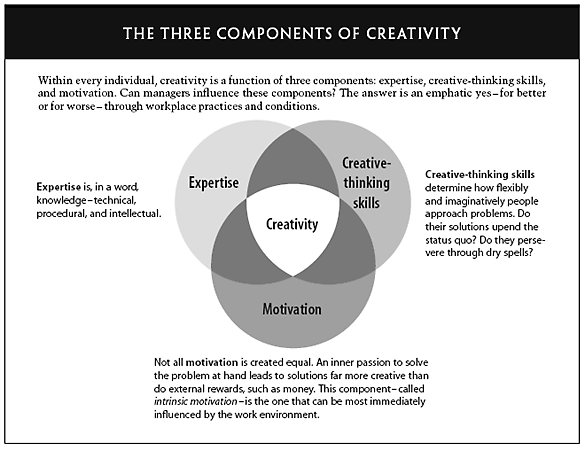
Author Teresa Amabile proposed that employee creativity may be achieved when three primary constructs are grouped together: expertise, creative-thinking skills, and motivation. «Expertise refers to everything a person knows and can do in the broad domain of his/her work. Creative-thinking skills encompass the capacity to put existing ideas together in new combinations when approaching problems and solutions. Motivation actually determines what people are willing to do and how likely they persevere through tough problems or obstacles» Take into account that this won’t necessarily only apply to the employee but to every individual.

I hope you liked this blog and if you have further questions, don’t doubt contacting me. I will leave you with a quote, and please, remember, we are all creative we just stop practising it for a little bit sometimes.

You can’t use up creativity, the more you use, the more you have.

Maya Angelou

References:
Pope, R. (2015). Creativity: Theory, History, Practice. Abingdon: Routledge.
Cropley, A. (2011). Definitions of Creativity. 10.1016/B978-0-12-375038-9.00066-2.
Amabile TM, Hennessey BA, (2010). Creativity. Annual Review of Psychology, 2010, Vol.61, p.569-598

Categorías
Sin categoría

Think higher to be higher

Welcome back to the second stop to our first blog; think about thinking. For a little summary, we talked about the basic types of thinking, but today, we are focusing on the heavy, hardcore, the expert level: higher-order thinking skills, mainly critical thinking.

Just for a formal definition, let’s explain what higher thinking is. Higher thinking skills are the processes in which people develop their intellectual thinking with which the person intends to obtain more knowledge and comprehension. These kinds of thinking skills go beyond basic observation of facts and memorization. Meaning, not more puppy examples 😪. We have now passed from kindergarten to college in a split second, we are getting closer to our degree, we need to work harder to be valedictorian and strive for greatness.

Higher-order thinking skills might sound a little bit overwhelming most of the time people think that is saying an idea out loud, and for other people to thorn it into pieces when it’s not (that mean). The higher skills help you to think deeper, to ask yourself questions of most of the things if not all of it, to analyze if your ideas are good or in what way they can get better;, instead of just memorizing facts for your exam and then the information in your head is deleted. HOTS (Higher-order thinking skills) makes you take these facts and understand them, infer from them, connect them to other facts and concepts, categorize them, manipulate them, put them together in new or novel ways, and apply them as we seek new solutions to new problems.

Let’s jump right into critical thinking. According to Paul and Elder (2007), “Much of our thinking, left to itself, is biased, distorted, partial, uninformed or down-right prejudiced. Yet the quality of our life and that of which we produce, make, or build depends precisely on the quality of our thought.” Critical thinking is a skill that allows you to make logical and informed decisions to the best of your ability. For example, a child who has not yet developed such skills might believe the Tooth Fairy left money under their pillow based on stories their parents told them. A critical thinker, however, can quickly conclude that the existence of such a thing is probably unlikely—even if there are a few bucks under their pillow. Critical thinking is, therefore, the foundation of a strong education. To understand better, we shall explain Bloom’s taxonomy, it was designed with six levels to promote higher-order thinking. The six levels were: knowledge, comprehension, application, analysis, synthesis, and evaluation. (The taxonomy’s levels were later revised as remembering, understanding, applying, analyzing, revising, and creating.)

This theory is often shown on a pyramid in which the last three levels of Bloom’s taxonomy (analysis, synthesis, and evaluation) include critical thinking or higher-order thinking skills. Critical thinking understanding is our aim for today’s blog, so people take out your notebooks and sharpen your pencils because we are about to start.

Image result for bloom's taxonomy"
  • Analysis: requires judgment to be able to analyze all the knowledge that you have been taught throughout your whole life. For example, distinguish between a fact and an opinion. This can be hard since as we already said, it starts about questioning what you have learned and there could be cases in which you realize what you thought was true it wasn’t. Like Santa Claus, he doesn’t exist, and all that time your parents bought all of your gifts.
  •  Synthesis: involves an open mind and an open perspective of things. Infer between different sources (such as essays, articles, works of fiction, lectures, and even experiences) to get to a conclusion. Some questions that could help to synthesize are: what alternative would you suggest for…? What changes would you make to revise…? What could you invent to solve…? During the analysis, you are going to synthesize, e.g. it is very unlikely that Santa Claus goes around the whole world, for only a night, that even has the capital to actually buy all of the children’s presents, and also with your experience you have never seen him, it can make you doubt his existence.
  • Evaluation: On the top level of the pyramid, this is the last step because is necessary to have all the previous knowledge to get to this point. It’s about making judgments about the value of ideas, items, and materials. Again, Santa Claus you’ve asked you questions, put together your information, and now you need to evaluate it, our conclusions? Sadly no, Santa does not exist, and all this time our parents have been the ones buying the gifts.

Again, the example it’s very simple but, these are things you are not very capable of developing at a shortage, as said in the previous blog this skill starts developing after 11 years old (which is the time Santa Claus stops bringing presents). At school, you start practicing without notice. Usually, these steps are done unconsciously but remember our brains are always working even if you don’t see it. 

References:
https://www.rasmussen.edu/student-experience/college-life/critical-thinking-skills-to-master-now/
https://cetl.uconn.edu/critical-thinking-and-other-higher-order-thinking-skills/#
https://www.thoughtco.com/higher-order-thinking-skills-hots-education-3111297

Categorías
Sin categoría

Think about thinking

Have you ever thought about how you think? The fact that that we even have the ability and sometimes that we take things for granted? In this blog, we are going to talk about the different types of thinking.
Let’s have an example, when we see babies we think that they are adorable and how they always look so amazed by their surroundings, and that is because we start developing a type of thinking called «concrete thinking», let me guess, you didn’t even know that there are types of thinking? Am I right? Don’t feel bad, before my cognitive skills and creativity class I didn’t either, so let me pass you my recent knowledge.

Image result for concrete thinking"

Concrete thinking is literal thinking about physical things. According to noted psychologist Jean Piaget, babies and young children go through predictable stages of cognitive development during which they gradually move from concrete to abstract thinking.
This kind of thinking stays until around age eleven; we are beginning adolescence, juju! That’s when things start to get a little bit complicated, but no worries, I would explain it, just for you.
Along with our concrete thinking, personal experiences, and observations, we form hypotheses, predictions, consider alternatives and plans.

Image result for logical thinking"

Now, we get to logical thinking. You might have heard of it, in school, probably you imagine some professor screaming, «C’mon guys! Think logical», yeah like it was that easy! Right? Well, actually it kind of is. We use our reasoning to help us «make sense» of things, with the help of facts, reasons, relationships, and structures. Plus, to answer to our angry teacher.
«The ability to interpret, combine ideas and develop a series of conclusions from certain data or information perceived» is what we call inferential thinking. To get to these conclusions, we use our sensory system or as you may know: five senses. Using these senses will allow perceiving data in different ways, for example, let’s say you go out on a playground and the first thing you notice is that the floor looks wet, and smells like it rained so, based on our sight and smell we could say that it rained earlier.
Last but not least, critical thinking! «it involves the conceptualization, analysis, synthesis, evaluation, and ultimate application of information so that the learner may reach conclusions, or from independent judgments based upon what the learner has experienced combined with previous knowledge» Allen, 2008. In this kind of thinking, some steps could lead to great critical thinking, but for that, we would do another post, so stay tuned.

References:
Edublox . n.d ). Logical thinking : A learned Mental Process . [Online].
Retrieved from web page: https://www.edubloxtutor.com/logicalthinking/ January 11 th ,
Anonymous. (2019). Inferential comprenhension . 12/01/2020, from
NSW Government Web site: https://education.nsw.gov.au/teaching and learning/studentassessment/smart teachingstrategies/literacy/reading/inferential comprehension
https://www.healthline.com/health/piaget stages of development
https://www.healthline.com/health/concrete thinking
https://www.goodtherapy.org/blog/psychpedia/concrete thinking
https://www.healthline.com/health/piaget stages of development

Categorías
Sin categoría

Do you have what it takes? Basic thinking skills

Hey there! We all now we breathe automatically because our body needs it but, have you noticed that if you think about breathing, you start doing manually, it’s weird, right? Every day we do a large number of processes that we aren’t conscious about it.

That is what happens to our basic thinking skills. Before we get more into it, let me ask you, how do you know a dog is a dog? Did somebody tell you about them? Did you watch it on tv? Or better, you saw one when you were little. It could’ve been millions of different ways, but I’m going to show you used your basic thinking to realize you were seeing a dog for the first time in your life when you were little.

The basic thinking processes are basic, not because they are simple processes but because they constitute the basis for developing analytical, critical, creative, and evaluative thinking. Most of the time these skills are used probably every day, but the fact we do it unconsciously doesn’t mean that our brains don’t do the mechanism itself. It requires intellectual abilities that involve directing attention to observe, describe, compare, relate and classify. In today’s blog, those aspects are the ones we primarily are going be talking about so; people take your seats and popcorns, the show it’s about to start.

“Observation is a research method, as well as a data collection method.”

– Powell & Connaway
  • Observation: You may think it just merely seeing and don’t know that there is a whole process going on. Well, the phrase «don’t believe until you see it» makes a lot of sense here. Let’s think about our puppy, how do you know a dog is a dog? The first things to notice are the shape, the hair and the size of the animal, however since it is our first time observing a dog, it can be hard to identify because they are very diverse but, what if just yesterday you watched tv and there was this white fluffy thing barking and it was referred to as a dog, and today you see that the neighbor has the same dog, with the same characteristics. Therefore, observation is the ability to perceive something to gain information.
  • Description: we often use «definition» and «description» as synonyms and regularly they are, but still, they have slight differences, and in this context is primordial to know their discrepancies. Think again about the dog. A definition will be, dogs are small but also big, they bark (a lot), they are very smart and funny. On the other hand, a description has more details; the neighbors’ dog was small but, white-haired, and it was just sleeping.  Hence, a definition is a general idea and description has more details.
  • Comparison is the process of identifying similarities and differences between two or more objects. If you haven’t figured it out yet, these steps are in order; hence, we use our observation skills to compare. How do we differentiate between a dog and a cat? we had already observed and described each of them, the next step is to compare them and for that we use questions, do they have the same shape of tails? Do they have whiskers? Do they bark?
  • Relationship: the fourth step is finding the connection to our information. With the previous questions already answered, the next step is to find the relation in them. The cat’s tail is fluffy, he has whiskers, and it doesn’t bark (that we know of). On the other side, the dog’s tail is fluffy too, he doesn’t have whiskers, and it does bark.
  • Classifying: the process of sorting data into groups based on relevant characteristics or attributes. Relation and classification are very close steps since while you are finding the relationship you start classifying them. Thus, for the last round, we need to find a general description of dogs and find the relation between our answers to figure out which one is the dog and then our to group to classify will be cats and dogs.

This example might have been really easy but, you need to realize that these basic skills are often used in more complex topics in which every step could difficult. We do these steps most of the time and very quickly (in cases like this one) so give yourself some credit for having developed basic skills when you were little.

References:
Burns, D., Leppien, J., Omdal, S., Gubbins, J., Muller, L., & Vahidi, S. (2006). Teachers’ Guide for the Explicit Teaching of Thinking Skills. Connecticut. Schiffman, K. (2014). Fundamentals: Normative and Descriptive Claims. Yale University. Video created by Gaurav Vazirani. https://www.youtube.com/watch?v=KQOiHKT46zk  Ø http://eprints.uny.ac.id/1807/1/P%20-%2063.pdf Ø https://www.istockphoto.com/us/es/vector/vector-design-relation-of-thinking-solution-and-process-concept-infographic-of-gm546449264-98667811

Crea tu propio sitio web gratis en WordPress.com.Crear tu propio sitio web.
Empezar gratis